Thursday, 12 December 2013

Info About Malaysia Property and Real Estate-Find Malaysia Real Estate to Buy


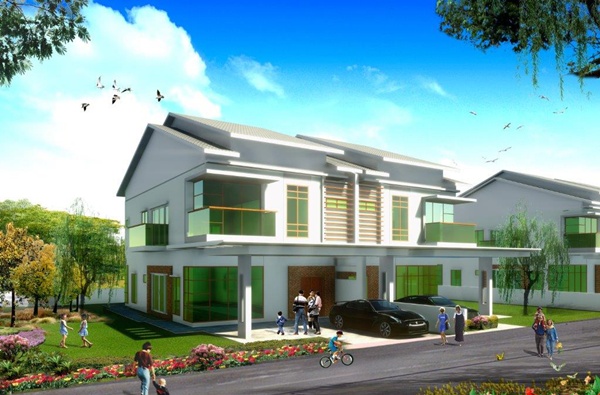
Would you like to buy Malaysia property? On this site, you will see listings for many Malaysia property and real estate offerings. You can find the perfect plot of Malaysia real estate for you

The best Malaysia real estate is featured here. If you want to invest in Malaysia property and real estate, look through our listings. We make it easy for you to buy Malaysia property.

At any given time, there are a huge number of Malaysia property and real estate listings available to interested buyers. Our goal is to showcase the very best Malaysia real estate offerings in one place. If you have been thinking about purchasing a plot of land in this nation, there is no time like the present. On this page, you can learn more about a wide range of properties. Get in-touch with us if you are serious about trying to buy Malaysia property in the near future. We will work with you to find Malaysia real estate that is perfect for the project you have in mind.

Sunday, 8 December 2013

Malaysian Properties appears to be more attractive to Foreigners buyer

Malaysian Properties appears to be more attractive to Foreigners buyer

For foreigners intending to buy a home, Malaysia remains one of the most friendly and hassle-free nations in the region when it comes to acquiring properties.


As a nation, we have introduced policies that are friendly towards foreign property investors in Malaysia, especially so with the Malaysia My Second Home (MM2H) scheme, which comes with plenty of benefits for non-Malaysians buying homes here. At the same time, Malaysia is also perhaps one of the most flexible countries when it comes to legal issues relating to the buying of properties by foreigners in the region. 

Foreigners can buy any type of properties here, be it condominium, bungalow or even land, as long as it is priced above RM1million, effective from 1 Jan 2014. The buyer can buy both residential and commercial property in Malaysia, in his or her name, or under a company.

A non-Malaysian buyer must also obtain the state authority’s consent before a property can be transferred; this usually takes anywhere from six weeks to six months (in Kuala Lumpur, this typically takes one to two months).
 

Apart from that, the entire buying process is the same as a local buyer. Interestingly, if the foreign buyer is not residing in Malaysia, he or she can sign the sale and purchase agreement at the Malaysian High Commission in their country of residence.
 

As for financing, Malaysian banks and foreign banks in Malaysia do provide loans to foreigners. They will typically finance up to 70% or 80% of the property price, and this is quite a bargain compared to other countries.

The restrictions are quite minor for non-Malaysians intending to buy a property here. Naturally, they are prohibited from buying properties that are valued less than RM1million as at 1 Jan 2014. Non-Malaysians are also prohibited from buying properties built on Malay reserve land, and those allocated to Bumiputra interest.
 

Let us look at the other countries in the region:


Singapore

In Singapore, non-Singaporean property buyers are only allowed to buy limited types of flats and condominiums without the need for approval. However, there are two important criteria for assessment:

•    Must be a PR of Singapore
•    Contribute financially to Singapore
 

Unfortunately, most of the properties are categorised under restricted residential property, thus foreign buyers must obtain approval for purchasing these properties. What are the restricted residential properties? They include:

•    Vacant land
 
•    Landed residential property, such as bungalows, terrace houses, semi-detached houses
•    Residential property in a building of less than six levels
•    A Housing Development Board (HDB) shop-house
•    A HDB flat purchased directly from HDB
•    A resale HDB flat where HDB has consented to the sale
•    Executive Condominium bought under the Executive Condominium Housing Scheme Act, 1996

Indonesia

A foreigner cannot own land in Indonesia. However, a foreigner can only acquire the leasehold title to a building – however, the title only lasts for 25 years with an extension of 30 years for a maximum of 55 years and then it reverts back to the original owner.

Alternatively, a potential non-Indonesian buyer can set up a 100% foreign own company, but is only allowed to acquire property for only 25 years and is subject to renewal.
 

China

China is set to tighten restrictions on foreign real estate investment, according to a statement from the Chinese Ministry of Commerce (MOC) early last year. The MOC, has asked local authorities to increase supervision on property investment involving foreigners and strengthen risk controls on the real estate sector.
 

He noted that the statement stipulates that foreign funded developers will not be allowed to make profits through the buying and reselling of real estate projects. It is noted that laws and procedures in China and for each state are neither simple nor transparent.

India

The Indian law states that non-Indians who reside outside of India cannot purchase property. A foreigner who is a resident in India may purchase property, but must obtain the approvals and fulfil the requirements, if any, as prescribed by the local authorities.

South Korea

Language is an issue in South Korea. For foreigners who do not have a comprehensive understanding of the Korean language, activities involving the purchase and sale of significant assets will be a challenge. Another issue concerns the remittance of revenue or profit from a property in Korea, which is not allowed unless the property is acquired through a stock company.
 

Thailand

The country prohibits foreigners from owning freehold property. The procedures are complicated and added that apartments can be purchased by foreigners as long as at least 51% of the building is owned by Thais.

Summary

In summary, we conclude that Malaysia is a great place for non-Malaysians to set up their second home or find a property to invest:

•    Direct ownership
•    Able to own freehold property
•    Established commonwealth legal system
•    Constitutional property ownership right
•    Established banking system to fund foreign acquisition
•    Workable purchase procedures
•    Statutory protection for homebuyer


Check out www.youproperty.com.my for Malaysia's latest property listings.

Saturday, 7 December 2013

Malaysian Condominium living with pets

Malaysian Condominium living with pets
With pet owners representing a significant portion of the population, furry, four-legged friends are factoring heavily into the decision to buy a condo in Malaysia. With increasing in number of households enjoy the companionship of a pet, there’s a high level of demand for pet-friendly housing, including strata properties.

Unfortunately, many condos, apartments, flatin Malaysia have house rules which stipulated No Pets allowed within the unit and anywhere in the compound.

Some condos house-rules have used strong words, for example:

VISTA KOMANWEL CONDOMINIUM HOUSE RULES & REGULATIONS

1.2.4 Household Pets and Livestock
(a) No rearing of pets, livestock and other animals including poultry, birds etc are allowed both within the Condominium Units or kept in any part on the Building or perimeter of the Common Property.

(b) The Management reserves the right to remove any such pets found within the Building at the pet or livestock Owner's/Resident’s expenses.

There are also some condos house-rules with more vague wordings, which often suggested “calm and good pets are okay”.

11.6 No Owner/Resident may keep any animals which may cause annoyance to other residents. The Management, at its discretion, reserves the right to remove such animals within the Complex at the Owner's expense.

Pets are good for us
Petcare Information and Advisory Service Australia Pty Ltd (PIAS) found that pet owners enjoy better mental health, lower blood pressure, and higher satisfaction with home life. Communities where people walk their dogs have a lower incidence of violent crime and a higher perception of neighbourhood friendliness.

Pet-friendly strata properties attract more people and have lower turnover rates and higher profitability. And communities that work together, talk regularly and create more opportunities to socialise are much healthier communities.

We understand there are some properties that simply do not want pets in the building and this is, of course, fine.


Check that rulebook
Before you bring in your animal friends it’s very important to check the property by-laws or rules. And don’t think that just because Fido is cute and doesn’t bark (much, ever) that everyone will turn a blind eye and allow him to stay.

If the strata scheme by-laws or rules clearly says no pets, then that’s what it means. Breaching this could mean a fine for you and a new home for Fido.

The pet application forms are not meant to change people’s minds or their by-laws or rules. They’re meant as a way of helping those apartments, which may welcome pets or may be considering allowing pets, to assess the situation and of course to encourage owners to seek permission from their building’s governing body in the first instance.

The forms are a way of helping people living in strata to be responsible pet owners, while at the same time encouraging more pet-friendly apartments.

Be a smart owner
The key is for pet owners to be able to demonstrate they’re responsible, and for some strata schemes to re-consider whether their pets policy meets the changing needs of modern lifestyles.
It may be that residents’ wants have actually changed since the building was first built, and this should be considered.

Owners must also be conscious of the history of a building too. New owners should never expect for it to be a matter of submitting an application and having it accepted. Some people have specifically chosen buildings based on no pet policies, and these opinions might not change overnight, no matter how responsible the new pet owners are.

The key is for pet owners to be able to demonstrate they’re responsible.


More Japanese opt to live in Malaysia

PETALING JAYA: The Japanese have overtaken Iranians in making Malaysia their second home, snapping up properties in the Klang Valley and other urban areas.
According to the Malaysia My Second Home Centre, Japan has been the top participating country since last year, when the country was hit by a tsunami and a nuclear crisis in Fukushima.
Malaysia's political stability and economic growth are said to be a big draw.
MM2H statistics showed that the number of Japanese applying to participate in the programme doubled from 195 in 2010 to 423 last year. A total of 787 Japanese applications were approved from 2009 to last year.
The Chinese jumped to second place last year, with 405 applications approved.
The Iranians, who topped the list from 2008 to 2010, dropped to third place last year and fourth this year, below the Bangladeshis.
As of March, 18,090 foreigners have successfully applied to participate in MM2H.
The rise in Japanese applicants followed the announcement of Tourism Minister Datuk Seri Dr Ng Yen Yen in late 2010 that Japanese senior citizens were welcome to make Malaysia their second home.
She had said the number of Japanese aged 65 and above was increasing, and living in Malaysia was ideal due to its strategic location, advances in medicine and cheaper living costs.
Real Estate and Housing Developers Association president Datuk Seri Michael Yam said Malaysia, as part of its Look East policy in the past few decades, had focused on making living here convenient and comfortable for the Japanese.
This, he said, included the setting up of a Japanese School in Kuala Lumpur in 1966.
The school is the fifth oldest Japanese school overseas, with spacious premises that include a kindergarten and primary and secondary schools.
Such initiatives had helped to build a cordial relationship between the two countries, Yam said, adding that there were many Japanese investors in Malaysia today.
“These people used to work in Malaysia. When they went back, they probably thought that this is not a bad place to have a second home, especially since it is one of the cheapest places to live in,” Yam said.
He noted that Malaysian condominiums now incorporated a “sprawling lifestyle complex” approach, which includes amenities such as big swimming pools and tennis courts.
“You get good value for money, which you don't necessarily get in other countries, which are more densely packed,” he said, adding that Mont Kiara, which is popular among expatriates, was one of the biggest Japanese enclaves in the country.
According to the Japanese Embassy, the earthquake and tsunami which happened in March last year were another “push factor”.
Japanese Ambassador Shigeru Nakamura said there were about 1,000 couples who have made Malaysia their second home.

MALAYSIA PROPERTY REVIEW: Upcoming launch : Nadi bangsar by Hap Seng Land

Condominium in Mont Kiara and Condominium in Bangsar area are usually among hotspots for expats and foreigners.

Friday, 6 December 2013

Foreigners can buy Malaysian properties worth RM1 million or more, double from now

MALAYSIA'S government has doubled the minimum value of properties that foreigners could buy to RM1 million (S$391,310), from RM500,000 currently.
Announcing this when presenting the 2014 Budget, Prime Minister Najib Razak said this was among a slew of measures being implemented to temper the sharp rise of homes in the country.
He said foreign buyers of Malaysian properties would have to pay 30 per cent in real gains property tax (RPGT) if they were to sell their units before five years.
The tax is at 5 per cent if the unit is sold after that period.

Thursday, 28 November 2013

The Establishment, Bangsar to be launched on Dec 7


Keystone Land Developments Sdn Bhd will launch The Establishment on Dec 7.
Located opposite Menara UOA along Jalan Bangsar, The Establishment comprises 646 units of serviced residences ranging from 445 sq ft to 838 sq ft. Prices for the units range from RM 400, 000 to RM1.5mil.
Set to be completed in 2017, The Establishment is linked to the Bangsar LRT station via a covered walkway. As such, there is easy connectivity to public transportation hubs including  KL Sentral via the LRT, which links to other public transportation services such as the KL Monorail, KTM Komuter, Rapid KL bus service and Express Rail Link KLIA transit, among others.
Shopping centres such as Midvalley Megamall, The Gardens, Bangsar Village I and II and Bangsar Shopping Centre are also within the vicinity.
The launch will be held from 10am to 4pm at Keystone’s sales gallery located at #29-7, Tower A, Menara UOA Bangsar. No.5, Jalan Bangsar Utama 1, 59000 Kuala Lumpur.
For more information, contact +603- 2282 5066.

Wednesday, 27 November 2013

Malaysia's Real estate negotiators subject to registration exercise

Malaysia Real estate negotiators subject to registration exercise

From left :
(From left) RISM representatives Tunku Fauzi Datuk Abdul Malek and Adzman Shah Mohd Ariffin, MIEA president Siva Shanker, PEPS president Lim Lian Hong, MIEA past president Soma Sundran and MIEA representative Lim Boon Ping.
Malaysian real estate negotiators will now be subject to a nationwide registration exercise implemented by the Board of Valuers, Appraisers and Estate Agents.
In a joint conference organised by the Malaysian Institute of Estate Agents (MIEA), the Royal Institution of Surveyors Malaysia (RISM) and Association of Valuers, Property Managers, Estate Agents and Property Consultants in the Private Sector, Malaysia (PEPS) , MIEA president Siva Shanker said that the rationale of the exercise, among others, was to enhance professionalism in the real estate industry.
To date, only real estate agents are required to be registered with the Board of Valuers. Under this exercise, real estate negotiators need to attend a one-day training programme run by MIEA, RISM and PEPS to obtain a certificate of attendance which will then enable them to register via a registered real estate agent.
The registration exercise, which began last month, is expected to end on 31 Jan 2014. Upon registration, negotiators will receive a tag, which they are required to display at all times during their conduct of business starting 1 Apr 2014.
PEPS president Lim Lian Hong said that the exercise is to ensure good governance and regulation in the industry. “As the country progresses, we look towards a regulated profession, where people toe the line.”
When asked about the exercise, Hartamas Real Estate Malaysia Sdn Bhd associate director Christopher Chan said that he was pleased with the move and that it was long overdue. “Up till this point, there are no qualifying exams to sit for. But with this one-day training programme, it is a good start to enhance professionalism,” said Chan.
A real estate negotiator who declined to be named was also supportive of the move. “I think it’s a good move as it will weed out illegal real estate agents and negotiators,” she said.
Real estate negotiators who have yet to register can contact :
MIEA : +603-7960 2577
RISM : +603- 7954 8358
PEPS : +60-7960 1318

Monday, 25 November 2013

Top 10 architectural trends for new Malaysian properties in 2014


Top 10 architectural trends for new Malaysian properties in 2014

Iconic architecture is a dominant trend that’s set to stay, judging from the wave of new buildings such as The Capers and The Fennel (pic, above left) developed by YTL Land & Development Bhd, Datum Jelatek by PKNS (Selangor State Development Corporation), Angkasaraya by UEM Sunrise Bhd and Icon Residence Mont’Kiara (pic, above right) by Mah Sing Group Bhd. Few in number but growing in stature, they make their presence felt with creativity and imagination.
The Fennel, for example, alters the skyline with its sharp and angled towers. “Its form, while unique to high-rise towers in KL, is actually a composition of standardised floor plates for the units – albeit stacked in a manner where every floor is incrementally adjusted outward or inward in groups of eight.
The result is a distinct profile in the skyline – somewhat “gravity defying”– but the floor plans are typical and repeated,” shares Rene Tan of RT+Q Architects, the firm which designed the 38-storey residential towers.
2. Dual key units
Offering a studio apartment attached to the main apartment, each with separate entrances, dual key units are increasingly gaining ground with developers.
Recent projects offering this layout include Zefer Hill Residence developed by Villamas Sdn Bhd, AraGreens Residences @ Ara Damansara by HSB Development Sdn Bhd, Urbana Residences @ Ara Damansara by Weida (M) Bhd and EcoSky @ Taman Wahyu by Eco World Development Sdn Bhd.

They promise flexible occupancy for multi-generational families to co-exist under the same roof, or the ability to subsidise loan repayments by renting out one of the apartments.
“A family could live here and rent out the studio unit, or it could be for adult children who want their privacy and independence. It could also be the other way around. If the children leave, the husband and wife can move into the studio, and rent out the main unit,” says developer Mitraland Group’s CEO Chuah Theong Yee of his Vina Versatile Homes project (pic, right) in Taman Seri Taming, Cheras, Kuala Lumpur, which offers dual key units among its choice of layouts.
“The response to the dual key units has been pretty encouraging,” adds chairman Datuk Johan Ariffin. “People like it and they see the possibilities. It’s good for them to have the option for the older child to have privacy, or to rent out the studio to subsidise loan repayments.”
3. Condo beaches
The last few years have seen a race by Malaysian property developers to offer the country’s first man-made beach for private residential dwellings. Projects include Verve Suites Mont’Kiara (pic, above) developed by Bukit Kiara Properties Sdn Bhd, LaCosta by Sunway City Bhd and Le Yuan Residence by UOA Group.
Christened Versilica Sky Beach, Verve Suites’ sandy playground is not only the first to complete, it physically tops the others by crowning one of its four condominium blocks, rather than being located on a podium. Besides the beach, a pool, cafe, “chill zones”, recreational rooms, Jacuzzi and sun garden with sunken seater sit on top of 37 storeys of 250 fully furnished suites.
4. Private lift lobbies
Lending one added advantage of security and exclusivity, private lift lobbies can be found in developments such as Sunway Palazzio by Sunway City Bhd, 28 Mont Kiara by UEM Sunrise Bhd and IOI Properties’ Puteri Hills luxury town villas.
The lift opens straight into your apartment as doors may open on opposite sides and on specific floors designated by your access card.

Another project to offer private lift lobbies is Serai by Bandar Raya Developments Bhd, currrently under construction in Bukit Bandaraya. The RM900mil luxury project will comprise 121 apartments in two 21-storey towers. Its five spacious layouts are generously proportioned from 4,000 sq ft to a royal 14,000 sq ft in the penthouse.
“Serai is poised to take your breath away with a treasure trove of thoughtful, well-designed luxuries,” says Hud Bakar, managing director of RSP Architects Malaysia which designed the project.
5. Landscaped back lanes

It seems that back lanes are now becoming obsolete. These forgotten wastelands, historically populated by rubbish bins and alleycats, are increasingly being turfed over and made into car-free communal spaces.
Examples include Ken Rimba in Shah Alam developed by Ken Holdings Bhd (pic, above left), LakeClub Parkhome in Rawang by DA Land Sdn Bhd, Parkville townhouses by Sunway City as well as Tiara South (pic, above right) in Semenyih developed by Kueen Lai Development Sdn Bhd.
6. Double decker grounds
Pedestrian lifestyle facilities above car parking in landed strata developments make life a breeze at The Arie in Bukit Sri Damansara developed by Loh & Loh Corporation Bhd, Embun @ Kemensah Heights (pic, above right) by Titijaya Group and 16 Quartz Melawati (pic, above left) by Mitraland Group.
This way, cars are confined to the lower levels without endangering children at play. This leaves the upper grounds blissfully free of asphalt while being generously peppered with water features, walkways and playgrounds.
“Large sliding doors have been selected for the balconies and main entrances to blur the definition of private and public domain fronting the common open space. Hence, the courtyard becomes the ‘extension’ of the living room at ground level and the balconies above,” says Ar. Woo Yoke Khing of Kumpulan Senireka Sdn Bhd, commenting on Embun @ Kemensah Heights.
7. Sky bridges
More and more projects are offering sky bridges or communal spaces that connect towers at upper levels. Examples include Datum Jelatek (pic, above left) by PKNS and Verve Suites KL South (pic, above right) by Bukit Kiara Properties Sdn Bhd.
“Sky lounges have been quite a trend in the last few years as developers innovate to improve the overall lifestyle of apartment community living. Sky bridges, in particular, are emerging for a few reasons.
Sometimes, the existing building’s constraints do not allow for a rooftop sky lounge so facilities bridging between the two towers are a brilliant solution to getting resident activities off the ground,” says Dion Vercoe, managing director of Palladio Interiors which worked on Verve Suites KL South.
8. Generous, full-width balconies
Large balconies which either span the entire living room, or are outdoor terraces in themselves, can be witnessed in projects such as Arcoris Residences (pic, above left) in Mont Kiara by UEM Sunrise Bhd, KM1 East by Berjaya Land Bhd (pic, above centre) and Eco Sky Residences by Eco World. These spaces are large enough to accommodate alfresco dining and entertainment.
“The outdoor lifestyle is more holistic and more people want to enjoy the extension of their spaces, hence, the trend for bigger balconies that are also great for hosting parties.
And, while the whole unit is 2,400 sq ft in space, the balcony takes up to nearly 400 sq ft,” says Benson Saw, director of VW+BS, which furnished an apartment with a balcony converted into an outdoor lounge within the Troika condominium (pic, above right) near KLCC.
9. ‘Floating’ gyms
Not content to be tucked away in a corner, gyms are now being offered with a view. Often dubbed “floating gyms”, these workout spaces are usually designed to overlook swimming pools, magnificent views or lush landscaping.
Examples include Verdi in Cyberjaya by UEM Land Holdings Bhd, Laman Granview (pic, above right) in Saujana Puchong by IJM Land and Zeva (pic, above left) in Taman Equine by Trinity Group Sdn Bhd.
10. Communal streams
Swimming pools aren’t enough anymore. Developers now want to mimic or make the most of existing terrain with communal streams, lakes and wetlands. Examples include Tijani Ukay developed by Symphony Life Bhd (above, right) and Parkville homes in Lake Edge Puchong by YTL Land (pic, above left).
The Glades at Putra Heights, developed by Sime Darby Property Bhd, offers a lush and connected green lung centred by a wetland area. A central pond with miniature streams add allure to a morning stroll or evening jog.
As part of its By the Sea (pic, above centre) luxury condominium project, meanwhile, Selangor Dredging Bhd invested RM2mil to rehabilitate a stretch of river running through its site. The result becomes a plus point for house buyers, says its managing director Teh Lip Kim.


Saturday, 23 November 2013

Singaporean owner given a week to clean up Villa Nabila

JOHOR BARU: The Singaporean who owns the “spooky” Villa Nabila has been directed to clear the mess there within seven days.
The Johor Baru City Council (MBJB), which issued the order, said it would take over the job and bill the owner if this was not done.
Council public relations officer Aziz Ithnin said there was a lot of clearing work to be done with trees growing inside the bungalow and thick overgrowth.
“The owner has been paying quit rent prior to 1998 and has never failed to pay assessment charges.
“It is his responsibility to clean up the place,’’ he said yesterday.
Aziz said it would be better for house owners to rent out their property so that it would not be left idle.
Villa Nabila has been listed by US-based travel portal Expedia as one of the five most haunted places in Malaysia.
The unkempt villa has been in the news following reports that a 16-year-old boy went missing after entering the premise last week.
However, police found him sleeping at his girlfriend’s house in Taman Desa Mutiara on Sunday night.

Johor plans new tax on foreigners buying property

Johor plans new tax on foreigners buying property

PASIR GUDANG — Johor, whose Iskandar region has been a hot favourite with Singaporean investors, plans to impose a tax of 4 to 5 per cent on foreigners who buy property in the state to curb speculative fervour, but analysts say demand from Singapore has already been slowing in recent months amid an increasingly uncertain external environment.
Mr Ku Swee Yong, Chief Executive Officer of Singapore-based consultancy International Property Advisor, said: “Interest in the last few months has been subdued, as banks in Malaysia became more cautious about lending.”
“One year ago, banks there would lend you 90 per cent of the price, but now, it is at most 80 per cent. Even at 80 per cent, the banks are very careful about the developers’ price setting, especially if the borrower already has outstanding loans.”
“Meanwhile, the wealth effect and the feel-good factor in Singapore have diminished, as seen from the HDB resale market,” he added.
Johor’s State Housing and Local Government Committee Chairman Abdul Latiff Bandi said yesterday that the new tax would likely be implemented by the year-end or early next year, in a bid to control property prices and foreign ownership, the New Straits Times reported. The levy would apply to both Malaysia commercial and residential properties. Under the current policy, foreigners fork out a one-off payment of RM10,000 (S$3,910), regardless of the value of the property.
The state government will also look into barring Malaysians who purchased property from selling their units to foreigners. Mr Latiff said developers usually allocated 40 per cent of the units to bumiputras, 30 per cent to other Malaysians and the remainder to foreigners, the New Straits Times reported.
“Local buyers will not be able to transfer ownership of their units to foreigners once the 30 per cent quota (for foreigners) has been filled. These are just some of the steps that the state government will be introducing to safeguard the interests of locals,” he said.
The move also comes ahead of potential new measures by the government, such as raising the property gains tax, in the coming Budget on Oct 25 to rein in housing prices.
Singaporeans have been buying homes in Johor, especially in Iskandar, a 2,200-square kilometre zone three times the size of Singapore, spurred partly by nine rounds of cooling measures in the Republic since 2009, and also because of the much cheaper property prices and cost of living across the Causeway. Singaporeans account for 74 per cent of foreign home buyers in Nusajaya in Iskandar, according to UEM Sunrise, the master developer of the township.
“The new tax will have a dampening effect, but not much. Because a lot of the demand has been satiated, there are not as many Singaporean buyers as before still actively looking in the market,” said Ms Christine Li, Head of Consultancy and Research at property firm OrangeTee.
She noted that the Danga Bay mixed-use waterfront project in Iskandar, offering about 10,000 homes, is almost sold out after its soft launch in May. By pricing the units as low as S$250 per square foot, developer Country Garden has enjoyed a wildly successful first foray outside its home market of China. 

Johor's change in rest days "comes at a bad time"

Malaysia's Johor state has announced that from January 1 next year, the state's rest days will be on Fridays and Saturdays instead of Saturdays and Sundays.

SINGAPORE: Malaysia's Johor state has announced that from January 1 next year, the state's rest days will be on Fridays and Saturdays instead of Saturdays and Sundays.
The Singapore Business Federation (SBF), whose members have business ventures and investments across the Causeway and in the Iskandar Malaysia region, said the decision by the Johor state comes at a bad time, when links are increasing between Malaysia and Singapore.
SBF feels the move could make Johor slightly less attractive as an investment destination.
Speaking to Channel NewsAsia, SBF's CEO Ho Meng Kit said the move will make business more inefficient. 
He explained: "For example, if you have a Singapore company with a Johor subsidiary, there will now be only four working days which are aligned. So if you are going to transfer goods and services between the HQ and the subsidiary, you could only do it on four days (Mondays to Thursdays)."
It will not be the first time rest days in Johor are on Fridays and Saturdays. This was the case in the Malaysian state prior to 1994.
"Prior to 1994, that had been the arrangement. If you want to have your operations on Fridays, you may have to employ people and pay overtime for a workday there. But you may not be able to get your full load of staff...it certainly does make Johor slightly less attractive," said Mr Ho.
For the business federations in Singapore, one of their key concerns is linking the operations of some of their subsidiaries in Johor with those in other Malaysian states or cities like Kuala Lumpur and Penang. 
Currently in Kuala Lumpur and Penang, their working days off each week are similar to Singapore, on Saturdays and Sundays.
Mr Kurt Wee, vice-president of the Association of Small and Medium Enterprises, said: "The shortcoming is that even if the Johor workforce, economy, banks (are operational) on Sunday, the rest of the surrounding economic centres - Singapore, Kuala Lumpur - are not working that day. So...it's not going to be as effective a workday."

Why invest in Malaysia Real Estate?

Why invest in Malaysia Real Estate?

Direct Foreign Ownership with No Capital Controls 
Non-residents are free to purchase residential and commercial properties in Malaysia. All purchasers are subject to restrictions on Malay Reserve Lands and properties allocated for Bumiputras. There is a minimum investment value of RM500,000 (approx. USD $150,000) for property purchase according to the jurisdiction of different states in Malaysia.
 
Across both residential and commercial sectors, an increasing number of existing and new developments are CONQUAS compliant and fast adopting the Green Building Index (GBI) certification.

Transparent Torrens Land Administration System 
Malaysian land law is based on the Australian Torrens System. The rights of foreign investors to own and possess property and to seek legal redress in the courts are guaranteed under these laws.

Real Estate Investor-friendly Tax Environment
From 1 January 2010, the effective tax rate on disposal of real property is 5%, subject to the provisions of the Real Property Gains Tax Act 1976. No tax is imposed on profits gained if the property is disposed of after 5 years of ownership. There is no withholding tax on property disposal and no inheritance tax. Investors may have to pay tax on earnings depending on their income tax band.

Repatriation of Income is Allowed 
Bank Negara Malaysia does not impose any restriction on the repatriation of profits, rental or proceeds from divestment of investments in Malaysia by a non-resident.

Thursday, 21 November 2013

Elevia Residences – Life In A Picture Perfect Setting 

Taman Tasik Prima in Puchong is set to receive yet another jewel in its crown, in the form of Elevia Residences – an inspiring residential development overlooking a shimmering lake in the suburban enclave of Puchong. 

Elevia is coined in aspiration to raise to a higher place or position. As such, the name suits this development perfectly as this residential offering is lifted one flight from the ground, thus elevating the lifestyle of the owners of the homes.

Spread across 2.85 acres, Elevia comprises condominiums and villas in a unique lifestyle concept that reflects secured, leisure and practical living spaces.

Elegant Condominiums in Puchong

Respecting the demand for space and privacy, Elevia boasts a 22-storey low-density single-tiered condominium block with only 6 units per floor. The condominium has been developed to front the lake with spacious living areas flowing out onto a picturesque lanai. All units feature quality finishing and fittings, reflecting excellent workmanship and well-planned layout designs. The condominium boasts of three elegant designs with the following built-up sizes:
  • Type A – 859 sq ft (40 units)
  • Type B – 1,218 – 1,418 sq ft (85 units)
  • Type C – 2,357 sq ft (3 units)
Villas

Nestled amidst the beautiful landscaping and lush greenery of Elevia’s residential precinct are 34 spacious landed villas, boasting sprawling built-up sizes measuring from 2,620 to 3,034 sq ft. The villas come in three elegant design types, namely Type D, Type E and Type F. Tailored to suit the needs of modern families, the villas have 4 bedrooms, 3 bathrooms and 2 toilets.  The uniquely designed villas feature spacious living and dining areas that overlook and offer access to picturesque linear parks – a scenic view from the comforts of home. The private and pedestrianized neighbourhood lends a sense of exclusivity and privacy with its serene boulevards and interconnecting paths.

Experiencing the pleasures of life

Aside from elegant lake-front home designs and the option to live in an exclusive condominium or a regal villa, the development also offers a comprehensive range of modern and luxurious club-house facilities. Residents are free to experience the best of contemporary living at the sky gymnasium, the swimming pool and the panoramic sky lounge, or just basking in the pleasures of the floating pavilion. The development is also set to welcome a lifestyle mall at its doorstep in the future.

Strategic Location

To cater to the lifestyle needs of the modern generation, Elevia Residences is strategically located close to a wide array of amenities and conveniences such as commercial business centres, schools, shopping outlets, healthcare centres and access routes. Elevia is within a stone’s throw away from the best of Malaysian cuisine offered in the township of Puchong. Popular shopping hotspots in the vicinity include Carrefour, Giant and Tesco hypermarkets as well as IOI Puchong Shopping Mall. Taman Tasik Prima also boasts of shop offices, hawker centres, drive-thru fast-food outlets such as KFC and Pizza Hut and other retail businesses.  The upcoming The Wharf Retail Mall is also set to spice-up lifestyle standards in Taman Tasik Prima with a host of entertainment, dining and retail offerings.

Taman Tasik Prima also has an ample selection of national schools such as SMK Puchong Utama 1, SMK Puchong Batu 14, SMK Seksyen 3 Bandar Kinrara, SMK Bandar Puchong Perdana, SK Puchong Utama 2, SK Taman Puchong Utama 3,SJK(C) Han Ming, SJK(C) Yak Chee  and  SJK(C) Sin Ming .

Reputable healthcare centres within a 5-kilometre radius include Columbia Asia Hospital and KPMC Puchong Medical Centre, aside from private specialists and clinics operating in nearby commercial centres.

Elevia is an ideal location for students and professionals studying and working in neighbouring Cyberjaya and Putrajaya, which are a mere 15 – 20 minutes away from the development. Other established neighbouring townships that are easily accessible via a comprehensive network of highways, include Subang Jaya, Seri Kembangan and Bandar Sunway. Kuala Lumpur’s city centre is a mere 30-minute drive away from Elevia.

Elevia is a well-connected development, accessible via the Damansara-Puchong (LDP) highway, the South Klang Valley Expressway (SKVE), the North-South Central Link highway, Lebuh Bukit Puchong and the Kuala Lumpur-Putrajaya highway.

Taman Tasik Prima is also set to welcome LRT stations and interchanges in the future, making commuting convenient. At present, the township is served by RAPIDKL and Metro buses as well as city taxi services.

Targeted at upgraders, professionals, entrepreneurs, investors and young families, Elevia is scheduled to be launched in December 2013 and is expected to be completed by 2016. The developer is offering eligible buyers attractive benefits which include a 7% Bumiputera discount, free legal fees on SPA and loan documentation.


About the Developer

Elevia is a sterling development by Prima Nova Harta Development Sdn Bhd, a wholly-owned subsidiary of Symphony Life Berhad (formerly known as Bolton Berhad), one of Malaysia’s oldest and most established property developers. The development is conceptualised as a unique “resort-living” styled residential enclave with all the trappings of luxury and exclusivity. Symphony Life is committed to exceeding customers’ satisfaction in accordance to their brand promise of Live Better. Since its inception, Symphony Life has built more than 15,000 residential, commercial, retail and industrial properties throughout Malaysia. Property developments include the exclusive Tijani development in Kenny Hills, 6 Ceylon luxury condominiums in the heart of Kuala Lumpur and Taman Tasik Prima lakeside township. To experience the wonders of contemporary living surrounded by the best of nature, contact 03-8068 4030 or visit www.symphonylife.my .

Wednesday, 20 November 2013

Setia Awan launches second phase of Lavender Heights in Senawang

Setia Awan launches second phase of Lavender Heights in Senawang

Source: Malaysia Property Search Website
An artist’s impression of the Lilac double storey terrace unit.
Setia Awan Holdings launched the second phase of its Lavender Heights development recently on 16 Nov. Having experienced a 100% take-up rate of the first phase last year, Phase Two comprises 219 units of freehold double storey terrace and semi-detached homes in three variants – Lilac, Violet and Indigo, with built-up areas ranging from 1958 sq ft to 3302 sq ft.Having other main residential projects such as Setia Residences in Setiawan, Perak and SP Heights in Sungai Petani, Kedah, Lavender Heights is Setia Awan’s largest residential project outside Perak.
Lilac and Violet are double storey terrace units with four bedrooms and three bathrooms while Indigo comprises double storey semi-detached units with five bedrooms and four bathrooms. Double storey terrace units are priced from RM 365,040 to RM733,200 while double storey semi-detached units are priced at RM697,200 to RM1,107,700.
Setia Awan executive director Datuk Marcus Doh said that the Lavender Heights project is in line with the government’s call to build not just good, quality homes for the young, modern families, but one that is complete with the right facilities.
Lavender Heights spans 353 acres, and is located two minutes away from Senawang Specialist Hospital, 30 minutes away from Putrajaya and 45 minutes away from Kuala Lumpur via the LEKAS and PLUS highways respectively.
The second phase of Lavender Heights is expected to be completed by November 2015.
Setia Awan executive director Datuk Marcus Doh said that the Lavender Heights project is in line with the government’s call to build not just good, quality homes for the young, modern families, but one that is complete with the right facilities.
Lavender Heights spans 353 acres, and is located two minutes away from Senawang Specialist Hospital, 30 minutes away from Putrajaya and 45 minutes away from Kuala Lumpur via the LEKAS and PLUS highways respectively.
The second phase of Lavender Heights is expected to be completed by November 2015.
An artist’s impression of the Indigo semi-detached unit.

Tuesday, 5 November 2013

Malaysia Property Search


Malaysia Property Search

With the global housing market enjoying great success at this point in time, many people have begun to invest their money in real estate these days. If this is something that you have begun to consider as an investment option for yourself, then you may very well be wondering where the best places to invest in real estate are at this juncture. Currently, Malaysia is one of the most promising places for investors of real estate. This remains true when it comes to both commercial and residential properties. If you are thinking about investing in real estate, what are you waiting for?

The key to being able to find the right properties for sale is to know where to look. After all, it is unlikely that you will be easily able to shop for real estate in person unless you have the ability to travel to Malaysia. Instead, you may wish to use a Malaysia Property & Real Estate Search Engine. By doing this, you can enter the kinds of specific search criteria that you are looking for in addition to your budget and immediately receive a list of results from which to browse. Many people find that they are able to locate properties that are ideal for them using such a search engine.

Overall, using a Buy & Sell Malaysian Property website to find the ideal real estate investment for you can be a great idea. Just be sure that you take the time to truly understand how the property investment process works, if this is something that is new to you. From there, you can ensure that your investment yields the best results.

Sunday, 3 November 2013

Malaysia Property Search Engine


Malaysia Property & Real Estate Listing Website

Whether you are looking for residential or commercial properties, YouProperty has got all you need in your property search.

YouProperty is one of Malaysia’s favourite website for property seekers. 

We provide the latest tools and information for all buyers, sellers and renters in Malaysia. 
We are constantly working on improving and enhancing the website and search engine to maintain a dynamic and user friendly web-environment.

Visit YouProperty.com.my today, to access the country’s foremost properties information.